The Land Beyond the Sand
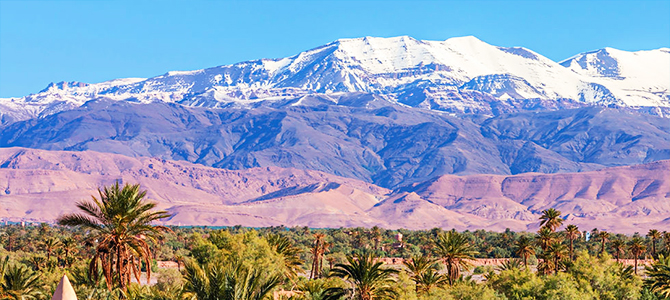
Atlas Mountains of Morocco. Retrieved from http://www.moroccotoursdesert.com/morocco-excursions/atlas-mountains-day-trip-excursion-from-fes/atlas-mountains-morocco/.

True or false? Morocco is all desert.

A common misconception about Morocco amongst the travel community is that the country is mainly rolling sand dunes as part of the Sahara desert. I’m sorry to break it to you all but the Sahara desert only occupies a small portion of the nation to the very south, far from the major cities. In fact Morocco contains hidden landscapes which await your exploration and astonishment.

In contrast to the bare and dry desert of the south, the region surrounding the Middle Atlas Mountains in the north is covered with greenery. The cedar forests within the area can be viewed as far as the eye can see, and are home to a rich assortment of flora and fauna, including a mischievous troop of Barbary macaques. To top it all off the region boasts breathtaking cascades amongst the rocky green terrain.

Still the biggest surprise to foreigners is the presence of snow in Morocco enabling us skiers to enjoy our favourite winter activity. The snowfields are located within the High Atlas Mountains with the impressive Mount Toubkal soaring above the clouds in excess of 4100 metres. The village of Oukaïmeden provides the best opportunity for skiing amidst the diverse Moroccan landscape even though it lacks the infrastructure of resorts in the Swiss Alps.
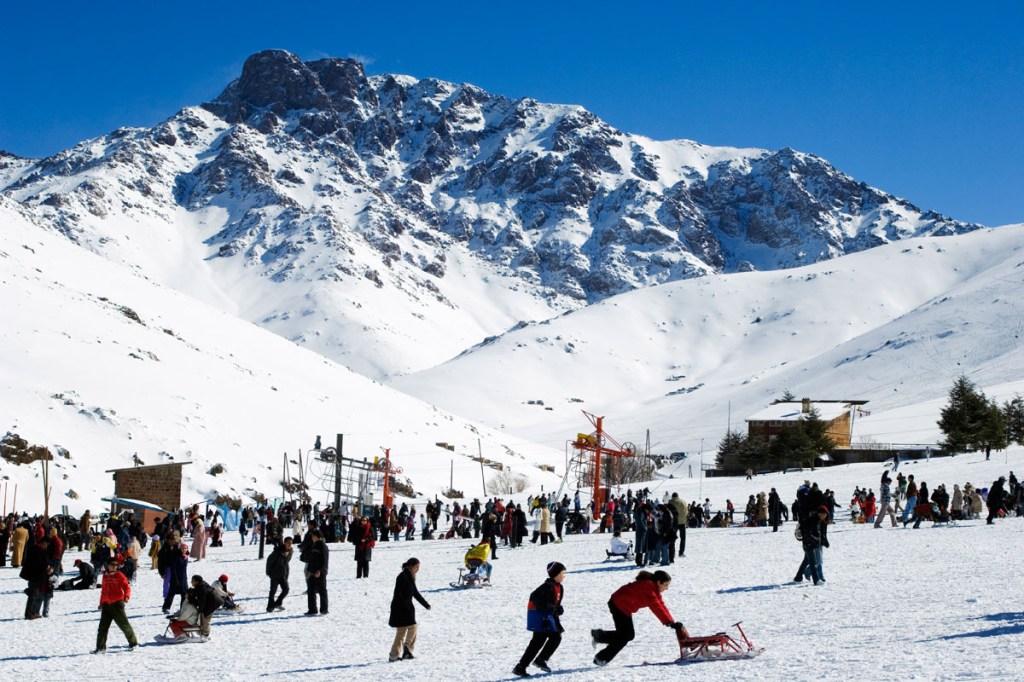
Oukaïmeden Ski Resort. Retrieved from http://www.misaritours.com/tour/weekend-at-oukaimden-marrakech/.

The misconception that Morocco is entirely desert can be presented as problematic when we consider the different groups of inhabitants around the country. For instance the Saharan region and its inhabitants is not representative of the entire Moroccan nation. Therefore it is more correct to say that the different landscapes of Morocco have allowed diversity between tribes and their cultures.

References

[Friendly Morocco] (2019, July 12). 5 Misconceptions About Morocco and Its People you didn’t know! [Blog post]. Retrieved from https://friendlymorocco.com.

Waterfalls & Forests: The Morocco You Never Hear About (2016, September 23). Retrieved from https://www.rugandrock.com.

Snow Skiing in Morocco? Yes, Really!. Retrieved from https://marocmama.com.
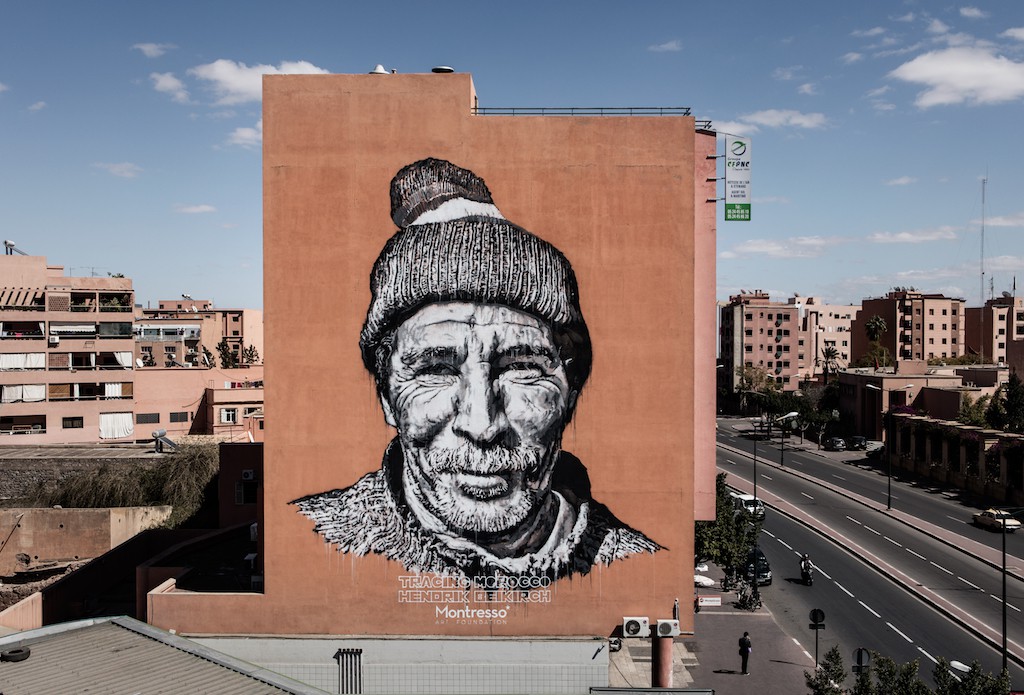
A Smiling Welcome to Marrakesh

Aziz installation by Hendrik Beikirch. Retrieved from https://theculturetrip.com/africa/morocco/articles/where-to-find-the-best-street-art-in-marrakech/.

No doubt on your journey to the ski fields of the High Atlas Mountains you will pass through the historic city of Marrakesh. This UNESCO world heritage site has lots to offer whether it be exploring the souks, strolling around the Menara Gardens or simply relaxing in the courtyard of a riad.

If you happen to arrive in Marrakesh by train you will not miss the large graffiti installation by German painter Hendrik Beikirch as you leave the railway station. This work of street art is situated on the wall of a rather unappealing building on Avenue Mohammed VI and is a part of the Tracing Morocco project in collaboration with the Montresso Art Foundation.

The mural displays a portrait of the local Moroccan mason by the name of Aziz who funnily enough had laboured to repair the very wall where his portrait is found. Through his large scale installation Beikirch intended to regard with great honour the fading workmen of Morocco who are relentless in the work they do to this day. As you observe the painting up close you can notice how Beikirch has truly emphasised the mason’s expressions in order to provide a sense of friendliness and belonging. This is fitting considering the mural is located outside the railway station which is seen as a gateway to the city.

Hendrik Beikirch’s installation has become somewhat of an “unofficial” tourist site as people are drawn to not only its grandness but also its simplicity with regards to the portrayal of Aziz the Moroccan mason.

References

Sinclair, M. (2016, September 6). Where to Find The Best Street Art in Marrakech [Blog post]. Retrieved from https://theculturetrip.com.

Hendrik Beikirch – Tracing Morocco | Montresso (2016). Retrieved from http://montresso.com/en.

[Butterfly] (2016, April 25). Hendrik ECB Beikirch in Marrakech [Blog post]. Retrieved from https://streetartnews.net.

Etard, P. (2016, June 2). Hendrik Beikirch – Tracing Morocco – Marrakech Wall – March 2016 [Video file]. Retrieved from https://vimeo.com.

Every Rug Tells a Tale

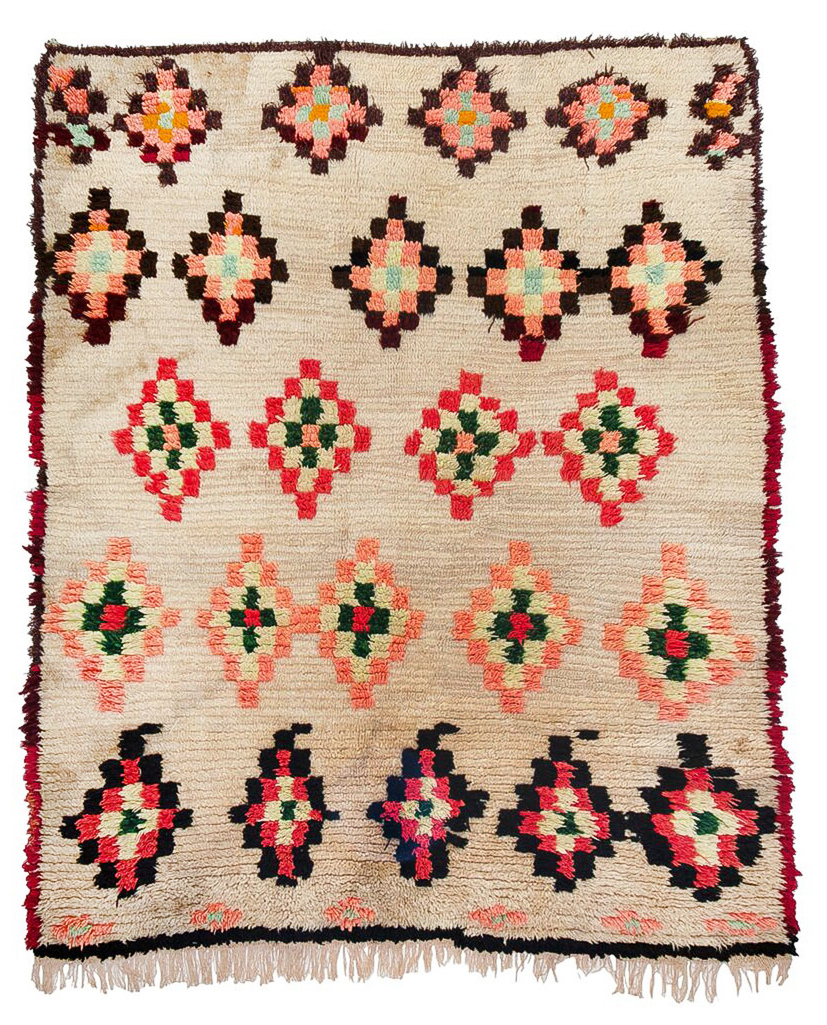
Example of an Azilal rug. Retrieved from https://www.lidoworld.com/rug-5-azilal/.

After a day of carving on white powder snow there’s nothing better than the feeling of taking off tight ski boots. Now imagine getting out of your boots onto a soft Moroccan rug which provides the warmth and support your feet require after a day of skiing.

The Moroccan rug, traditionally known as a Berber rug, has been hand-woven by tribes since the Paleolithic Era. It often will contain a variety of colours that complement each other as well as striking geometric patterns and symbols. I have always admired the art of Moroccan rugs which is why I have decided to unveil the meaning behind these extravagant textiles.

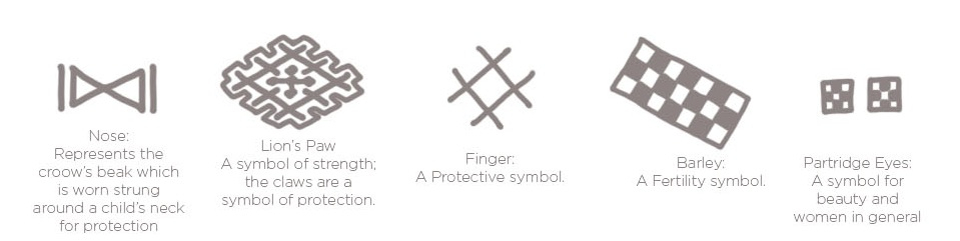
Of the many types of Berber rugs I wish to highlight the Azilal rugs as these are traditionally from the Azilal region near the High Atlas mountains where us skiers would find ourselves. Similarly to other types of Berber rugs the Azilal rugs portray the weaver’s wish to shield the human spirit from negative energy through symbols and talismans. For example the lozenge, chevron and diamond are considered female symbols which are attributed to fertility and sexuality. Male symbols include ladders and fishbones, and tend to frame the female motifs which is symbolic of protection.

Symbols commonly woven into Berber rugs. Retrieved from https://www.projectbly.com/blog/stories-and-secrets-of-moroccos-rugs.

Despite being a traditional object of Morocco the Berber rug has long been adopted by the Western world. Rugs are incorporated into professionally designed living rooms and bedrooms. Moreover the presence of a rug in a celebrity’s house can start a trend and soon enough everyone has one! The downside to Western embracement is that people are oblivious to the true significance of Berber rugs within Moroccan culture.

References

Symbols in Moroccan Berber Carpets (2018, August). Retrieved from https://www.maroctribal.com/blog-moroccan-rugs/73xx927dhnb3n5jdrsfh8s3habzeth.

The Stories and Secrets of Morocco’s Rugs (2019). Retrieved from https://www.projectbly.com/blog/stories-and-secrets-of-moroccos-rugs.

Berber Carpets Symbols (2018, August). Retrieved from https://www.craftic.net/berber-carpets-symbols/.