Is Morocco truly a dry nation?
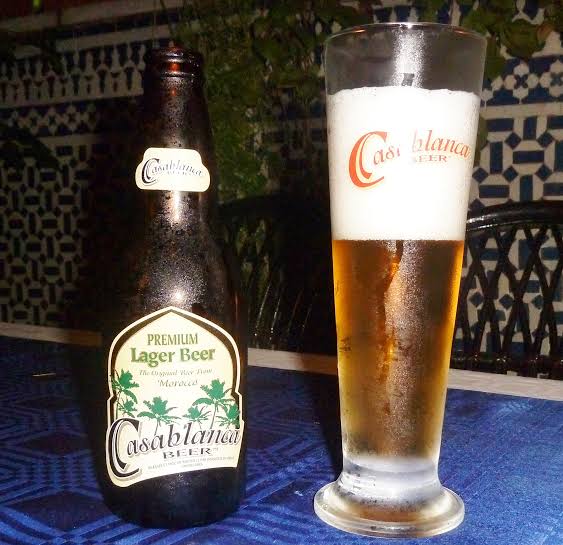
Morocco’s premium beer, Casablanca. Retrieved from https://en.wikipedia.org/wiki/Beer_in_Morocco

For a lot of skiers in Australia the first stop after the closure of the chairlifts is the village bar where they can drink a refreshing alcoholic beverage and reflect on the day’s events. If one was to finish a day of skiing in the Moroccan High Atlas mountains they would not have the same access to that well-deserved drink as they would hope.

Morocco has traditionally been a country that has prohibited the consumption of alcohol due to the muslim religion. However the rules and customs surrounding alcohol are not quite as they seem. In Morocco you can indeed buy and drink alcoholic beverages but it must be done in a discreet way as it is frowned upon in the public eye. This often entails buying alcohol from a tucked away supermarket room and leaving via a back door. This would be a shock to many foreigners as they are used to seeing alcohol in plain sight in all types of environments. 

Although the large majority of Moroccans do not consume alcohol, those that do are mostly male which may come as a shock for travellers as there is visibly still a gap in gender roles and norms. The exclusivity of male drinking in Morocco is illustrated by the drinking and smoking dens called brasseries which are unpleasant for females.

References

Kilkenny, C. (2014). Alcohol consumption in Morocco – Morocco World News. Retrieved from https://www.moroccoworldnews.com/2014/09/138246/alcohol-consumption-in-morocco/.

Food & Drink in Morocco | Frommer’s. Retrieved from https://www.frommers.com/destinations/morocco/in-depth/food–drink.

Smedberg, J. (2019). How to Drink Alcohol in Morocco. Retrieved from https://www.fodors.com/world/africa-and-middle-east/morocco/experiences/news/a-drinkers-guide-to-morocco.
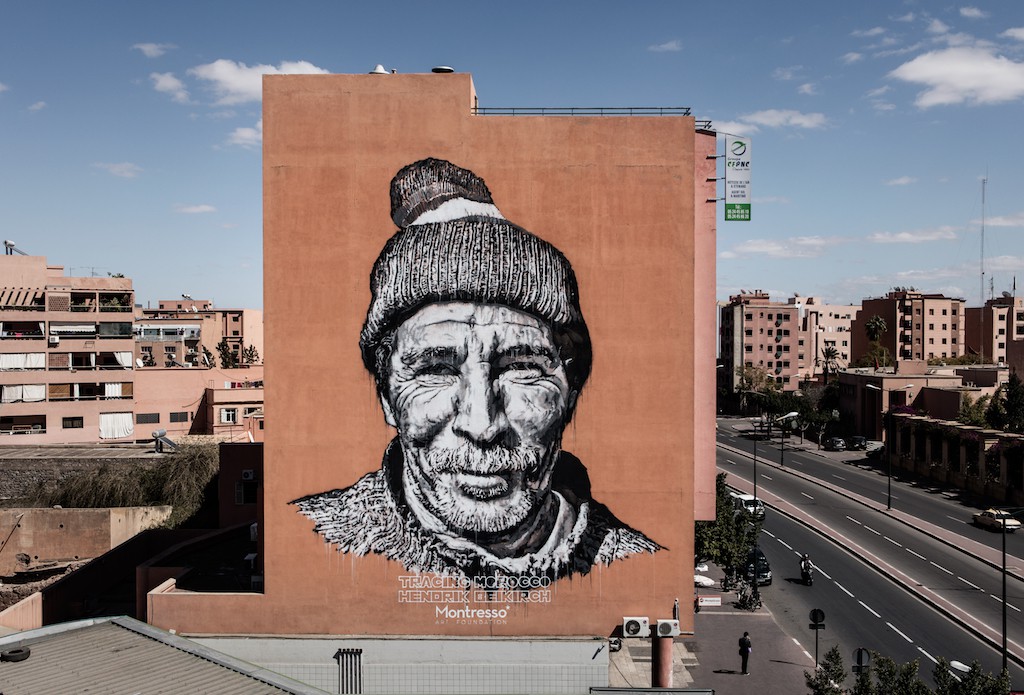
A Smiling Welcome to Marrakesh

Aziz installation by Hendrik Beikirch. Retrieved from https://theculturetrip.com/africa/morocco/articles/where-to-find-the-best-street-art-in-marrakech/.

No doubt on your journey to the ski fields of the High Atlas Mountains you will pass through the historic city of Marrakesh. This UNESCO world heritage site has lots to offer whether it be exploring the souks, strolling around the Menara Gardens or simply relaxing in the courtyard of a riad.

If you happen to arrive in Marrakesh by train you will not miss the large graffiti installation by German painter Hendrik Beikirch as you leave the railway station. This work of street art is situated on the wall of a rather unappealing building on Avenue Mohammed VI and is a part of the Tracing Morocco project in collaboration with the Montresso Art Foundation.

The mural displays a portrait of the local Moroccan mason by the name of Aziz who funnily enough had laboured to repair the very wall where his portrait is found. Through his large scale installation Beikirch intended to regard with great honour the fading workmen of Morocco who are relentless in the work they do to this day. As you observe the painting up close you can notice how Beikirch has truly emphasised the mason’s expressions in order to provide a sense of friendliness and belonging. This is fitting considering the mural is located outside the railway station which is seen as a gateway to the city.

Hendrik Beikirch’s installation has become somewhat of an “unofficial” tourist site as people are drawn to not only its grandness but also its simplicity with regards to the portrayal of Aziz the Moroccan mason.

References

Sinclair, M. (2016, September 6). Where to Find The Best Street Art in Marrakech [Blog post]. Retrieved from https://theculturetrip.com.

Hendrik Beikirch – Tracing Morocco | Montresso (2016). Retrieved from http://montresso.com/en.

[Butterfly] (2016, April 25). Hendrik ECB Beikirch in Marrakech [Blog post]. Retrieved from https://streetartnews.net.

Etard, P. (2016, June 2). Hendrik Beikirch – Tracing Morocco – Marrakech Wall – March 2016 [Video file]. Retrieved from https://vimeo.com.